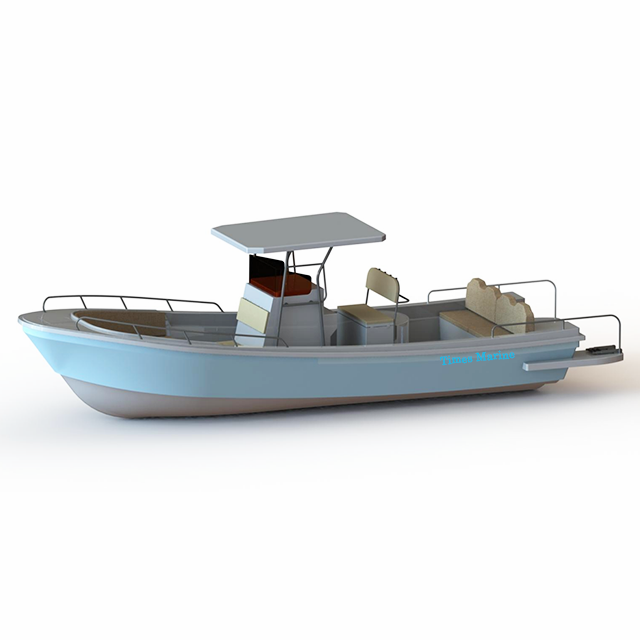
Professional sea fishing requires vessels that balance offshore capability, crew safety, and maximum deck utility without compromising performance in unpredictable swells. Commercial operators and professional guides face the daily challenge of selecting a vessel that minimizes downtime and maximizes catch efficiency. You need a platform that works as hard as your crew, standing up to saltwater intrusion, heavy payloads, and constant pounding. Often, operators struggle to choose between heavy, high-maintenance sportfish yachts and versatile, open-deck platforms. This guide breaks down why the center console architecture dominates offshore operations. We examine hull designs, material integrity, and supplier capabilities to help you evaluate the right platform. By understanding the structural mechanics and layout advantages, you can confidently assess Center console fishing boats for sale and secure a vessel that meets your exact operational demands.
Unrestricted Deck Access: The 360-degree fishability of a center console eliminates pinch points, allowing crews to follow large pelagic fish around the entire perimeter of the vessel.
Material and Structural Integrity: Deep-V fiberglass hulls provide the necessary weight and deadrise to absorb offshore chop, ensuring stability and reducing crew fatigue.
Strategic Sourcing: Choosing between a standardized production model and a custom fishing boat manufacturer depends heavily on specific payload requirements, target species, and regional offshore compliance standards.
Defining Success Criteria for Professional Sea Fishing Vessels
Operational Demands and Environmental Realities
Offshore fishing establishes a harsh baseline for any vessel. You are dealing with diverse sea states, rapid weather changes, and extended hours on the water. A professional vessel must withstand continuous structural stress from wave impacts while providing a stable, workable deck for the crew. The hull design must efficiently displace water and recover quickly in following seas. Captains require a reliable platform that maintains structural integrity over thousands of hours of operation. When you run 50 miles offshore, the boat must handle the outbound head sea and the inbound following sea with equal competence. Hardware must resist constant saltwater exposure, and the electrical systems need marine-grade tinned wiring to prevent corrosion failures.
The Limitations of Traditional Cabin Cruisers and Bay Boats
Bay boats fail in heavy offshore swells due to insufficient freeboard and shallow deadrise angles. They take water over the bow easily and pound violently in anything over a two-foot chop. Conversely, large cabin cruisers introduce massive operational drag. They burn excessive fuel and restrict deck mobility. Enclosed cabins block the crew from moving quickly around the vessel when fighting a fish. This creates dangerous pinch points at the stern and increases the risk of losing a catch under the hull. You cannot easily walk a tuna from the stern to the bow on a cabin cruiser.
Vessel Type
Deadrise Angle
Freeboard Height
Deck Mobility
Offshore Capability
Bay Boat
11° - 15°
Low
Excellent
Poor (Nearshore only)
Cabin Cruiser
16° - 20°
High
Restricted (Stern only)
Moderate to Good
Center Console
21° - 24°
Medium to High
360-Degree Unrestricted
Excellent
Multi-Environment Versatility
A professional vessel must transition seamlessly between deep offshore blue-water trolling and nearshore reef fishing. This versatility maximizes seasonal target species and keeps your booking calendar full. A well-designed hull draft allows the boat to navigate shallower nearshore waters to catch bait, while maintaining the heavy displacement required for offshore runs. This adaptability ensures the vessel remains productive throughout different fishing seasons. You need a boat that can anchor over a 40-foot reef in the morning and troll the 100-fathom line in the afternoon without swapping gear or feeling out of place.
Core Advantages of the Center Console Architecture
360-Degree Fishability and Gear Management
The centralized helm creates unobstructed walkways. Multiple anglers can hook, fight, and land fish simultaneously without tangling lines. This 360-degree access is mandatory when dealing with fast-moving pelagic species like wahoo or sailfish that quickly circle the boat. The open deck layout facilitates efficient gear management. Nets, gaffs, and tackle stay within reach without cluttering the primary fighting areas. Under-gunwale storage keeps rods secure but instantly accessible. When a rod goes off, the crew can move directly to the gunwale without navigating around bulkheads or cabin doors.
Helm Visibility and Vessel Control
A center helm station provides superior line-of-sight. Captains can spot surface activity, navigate floating debris, and monitor the entire crew efficiently. The elevated position offers a clear view of the water ahead and the deck behind. This visibility is essential for safely maneuvering near other vessels in a crowded fishing ground. You can watch the spread, keep an eye on the angler, and steer the boat simultaneously. You never lose sight of the action, which directly translates to higher catch rates and better crew safety.
On-Water Stability and Weight Distribution
Center console weight distribution keeps the center of gravity low, centered, and balanced. This design minimizes roll in heavy seas, providing a stable platform for anglers. By concentrating the heaviest components—fuel tanks, batteries, and the console itself—along the centerline, the vessel resists the lateral forces of waves. This stability reduces crew fatigue during 12-hour shifts. A balanced boat tracks straighter while trolling and drifts more predictably when kite fishing or deep dropping.
Single-Handed Usability and Solo Operation
The centralized deck layout enables a solo captain to run the helm, manage lines, deploy anchors, and dock the vessel safely. You do not need a dedicated deckhand for every trip. Controls and essential equipment sit within arm's reach of the steering wheel.
Approach the dock or fishing spot using the helm controls.
Step directly from the helm to the gunwale to secure a spring line or deploy the anchor.
Walk back to the helm in three steps to adjust engine thrust.
Move to the stern to clear lines or gaff a fish without losing sight of the helm.
This operational efficiency gives independent guides and commercial fishermen a massive advantage, keeping overhead low while maintaining high productivity.
Structural Comparisons: Center Console vs. Sportfish
Deck Space vs. Comfort Amenities
Center consoles prioritize active fishing space and speed. Sportfish vessels prioritize climate-controlled cabins, berthing, and galleys at the expense of maneuverability. For professional fishing operations, the open deck of a center console allows for more anglers and better fish-fighting capabilities. Sportfish boats offer comfort for multi-day trips but limit the practical fishing area to the cockpit. They require more time, space, and crew to maneuver. When a fish runs toward the bow on a sportfish, the angler must pass the rod around the outriggers and cabin structure. On a center console, the angler simply walks forward.
Integrating Client Comforts Without Sacrificing Deck Space
Modern designs utilize the console interior to house a functional marine head and basic dry storage. This satisfies client comfort requirements on charter trips while preserving 360-degree fishability. By integrating these amenities within the existing footprint of the console, manufacturers avoid encroaching on the valuable deck space. You get the necessary facilities for a full-day charter without giving up the bow fishing area. Some models even include a small berth inside the console for gear storage or a quick rest, completely hidden from the active deck.
Maneuverability and Trolling Motor Integration
Equipping center consoles with dual GPS-anchoring trolling motors provides a massive tactical advantage. This setup is rarely feasible on larger, heavier sportfish boats. These systems allow the vessel to hold a precise position over a reef or wreck without deploying a heavy anchor. You press a button, and the boat stays locked on the coordinates. This maneuverability improves fishing efficiency and reduces the physical effort required to position the boat in strong currents or windy conditions. You spend more time dropping baits and less time pulling anchor rope.
Technical Evaluation: What to Look for in Center Console Fishing Boats for Sale
Hull Design and Deadrise Angles for Offshore Performance
A deep-V hull featuring 21 to 24 degrees of deadrise at the transom is necessary for slicing through offshore chop. This design provides a smoother ride in rough conditions compared to modified-V hulls. The sharp entry of the bow cuts through waves, while the deadrise at the stern dictates how the hull settles into the water. A 24-degree deadrise requires more horsepower to push, but it prevents the boat from slamming into the troughs. Look for hulls with aggressive chines and lifting strakes that deflect spray downward, keeping the deck dry during high-speed runs.
Assessing Fiberglass Fishing Boats for Sale: Material Integrity
When evaluating fiberglass fishing boats for sale, inspect the fiberglass layup schedules and resin infusion processes. Hand-laid woven roving offers superior strength compared to cheap chopped strand matting. Inspect the stringer grid systems. A robust, foam-filled fiberglass structural grid distributes stress evenly across the hull, preventing flex and potential failure under heavy loads. Avoid boats with wood cored stringers that can rot over time. Tap the hull sides; you want a solid, dead thud indicating thick fiberglass, not a hollow echo. Check the bilge for clean, finished fiberglass work—sloppy resin runs indicate poor quality control.
Tactical Gear Access and Integrated Storage Systems
Design the deck layout for rapid-response gear access. You need under-gunwale rod racks, T-top rocket launchers, and heavy-duty tackle stations. Pressurized livewells with high-turnover pumps (minimum 1500 GPH) are mandatory to keep delicate baits alive. Look for insulated, macerated fish boxes built directly into the deck. Efficient storage systems keep the deck clear of hazards. Properly insulated fish boxes hold ice for days, preserving the quality of the catch during long trips back to port. Ensure all deck hatches feature heavy-duty gaskets and deep drainage channels to keep water out of the storage compartments.
Sourcing Strategy: Navigating Manufacturers and Suppliers
Evaluating a Center Console Fishing Boat Manufacturer
When vetting a center console fishing boat manufacturer, look at historical hull performance, warranty fulfillment rates, and dealer network support. A reputable manufacturer has a track record of producing durable vessels that perform well in demanding conditions. Strong dealer support ensures access to parts and service, minimizing downtime when repairs are necessary. Ask for references from other commercial operators. Find out how the factory handles stress cracks or gelcoat blisters. A good manufacturer stands behind their hull with a transferable structural warranty.
When to Partner with a Custom Fishing Boat Manufacturer
Partnering with a custom fishing boat manufacturer is required when specific fabrication is needed. Production boats often fall short for specialized commercial tasks. Custom builders can tailor the vessel to exact operational requirements.
Custom console placement to maximize aft deck space.
Reinforced gunwales for commercial hauling or heavy electric reels.
Specialized electronics arrays and custom transducer pockets.
Tailored livewell plumbing manifolds for specific bait types.
Custom builders ensure the boat is optimized for your specific target species and fishing methods, rather than forcing you to adapt to a generic layout.
Niche Alternatives: The Role of a Panga Fishing Boat Supplier
Comparing traditional deep-V center consoles to the panga design highlights the panga's high bow, narrow beam, and extreme fuel efficiency. A reliable panga fishing boat supplier provides vessels suited for specific coastal and offshore commercial applications. Pangas require significantly less horsepower to achieve planing speeds. They are highly economical to operate and can carry massive payloads relative to their size. While they lack the heavy-weather, high-speed capability of a deep-V hull, they excel in utility and shallow-water access.
Vetting an Offshore Fishing Boat Supplier for Compliance
Ensure the offshore fishing boat supplier provides vessels that meet or exceed USCG, CE, or local commercial maritime compliance and safety standards. Compliance with these regulations is mandatory for commercial operations. It ensures the vessel has been designed and constructed to withstand the rigors of offshore use. Verify all certifications, flotation requirements, and safety equipment capacities before finalizing a purchase. A non-compliant boat will fail commercial inspection and void your insurance policies.
Implementation Risks
Maintenance Realities of Open-Deck Vessels
Open-deck vessels expose electronics, switches, and upholstery to salt and UV rays. High-grade hardtops, marine-grade covers, and rigorous daily washdown protocols are necessary to protect these components. Saltwater corrosion quickly degrades electrical connections and hardware if not properly managed. You must implement a strict maintenance schedule. Flush outboards with fresh water after every trip. Inspect bilge pumps and float switches weekly. Apply corrosion inhibitors to all exposed wiring blocks. The open nature of the boat means you cannot hide from the elements; you must actively maintain the equipment.
Mitigating Adoption Risks Through Sea Trials
A professional sea trial is mandatory before taking delivery. Do not just run the boat on a calm lake. Take it into the ocean. Test hull behavior in a following sea to ensure the bow does not stuff into the waves. Check the static drift stability; see how much the boat rolls when sitting beam-to the waves. Test the livewell pressurization under load to ensure the pumps do not air-lock at high speeds. Pay attention to how the boat handles at different trim angles. Verify that the scuppers drain the deck quickly when backing down hard.
Conclusion
Define your exact payload, range requirements, and target species before contacting a manufacturer.
Request detailed structural layup specifications and wiring schematics from shortlisted builders.
Schedule loaded sea trials in realistic offshore conditions to verify hull performance and deck drainage.
Inspect the bilge, wiring harnesses, and plumbing access points for serviceability.
FAQ
Q: What is the ideal deadrise angle for an offshore center console?
A: For serious offshore performance, a deep-V hull with a deadrise angle between 21 and 24 degrees at the transom is ideal. This sharp angle allows the hull to slice through heavy chop efficiently, providing a smoother ride and reducing impact forces on the crew during long runs in rough seas.
Q: Are fiberglass center consoles better than aluminum for professional sea fishing?
A: Fiberglass is preferred for offshore center consoles due to its ability to be molded into complex, hydrodynamically efficient shapes like deep-V hulls. Fiberglass provides a heavier, more stable ride in rough water compared to aluminum, which tends to be lighter and produces a harsher ride in heavy chop.
Q: How does a center console compare to a sportfish for offshore trolling?
A: Center consoles offer superior maneuverability and 360-degree deck access, making it easier to fight fish from anywhere on the boat. Sportfish vessels provide more comfort and climate-controlled spaces but lack the agility and open deck space, requiring more effort to manage multiple lines during chaotic bites.
Q: What specific criteria should I look for when vetting a custom fishing boat manufacturer?
A: Look for a proven track record of structural integrity, clear communication regarding layup schedules, and the ability to accommodate specific requirements like reinforced gunwales or custom livewell plumbing. Verify their warranty fulfillment history and request references from other commercial operators.
Q: Why are panga boats considered a viable commercial alternative to traditional center consoles?
A: Panga boats feature a high bow, narrow beam, and flat rear running surface, making them incredibly fuel-efficient and capable of running on lower horsepower. They are highly economical for specific coastal and nearshore commercial applications, though they do not offer the same ride comfort in heavy offshore swells.
Q: Can a professional center console be easily operated single-handedly for charter or commercial fishing?
A: Yes, the centralized helm and open deck layout allow a single operator to easily access controls, manage lines, and navigate the vessel. This design is highly efficient for solo guides or commercial fishermen who need to minimize crew requirements while maintaining full control of the boat and fishing gear.