Is a 10-Person Fishing Boat Suitable for Both Fishing and Family Fun?Yes, a 10-person fishing boat can work well for both fishing and family outings. The key is being realistic about what ten people will do once they are on board. Ten passengers may have enough room for a day cruise, but fishing needs extra space for rods, tackle, coolers, and people moving around the deck. For most mixed outings, the boat works best when several people fish while the others sit, watch, or relax under shelter. The layout therefore matters more than the passenger number alone.
Can Ten People Fish and Relax Comfortably?
That depends on the activity. While the boat is cruising, most passengers remain seated and use relatively little deck space. Once fishing begins, people stand up, prepare tackle, cast, move with a hooked fish, and reach for the net or fish box. A boat may be designed to carry ten people without providing ten practical fishing positions.
Two boats with a similar passenger capacity can also feel very different on the water. Times Marine's 8 m open fisherman is rated for 9+1 persons and a maximum load of 2,760 kg. Its 7.6 m panga fishing boat is rated for 10 persons and a maximum load of 1,240 kg. The passenger numbers are close, but the available load and deck arrangement are not. Buyers need to consider the number of people together with fuel, water, engines, safety equipment, fishing gear, coolers, and luggage.
How Many People Can Fish at One Time?
The practical number depends mainly on the fishing method and the amount of clear deck space. Four anglers fishing from assigned positions need less room than a group that is repeatedly casting long rods and moving from bow to stern. Fixed seats, the console, storage boxes, rail height, and loose equipment can further reduce the area available for fishing.
Instead of assuming that all ten passengers will fish together, buyers should check the deck plan and identify the positions that can actually be used without crossing lines or blocking walkways. It is also useful to decide where non-fishing family members will sit while rods and hooks are in use.
What Makes a Layout Work for Both Uses?
A family fishing boat for 10 people does not need to be packed with accessories. It needs enough open space for fishing, secure seating for passengers, and storage that keeps bags and equipment out of the way.
Keep an open working zone for anglers
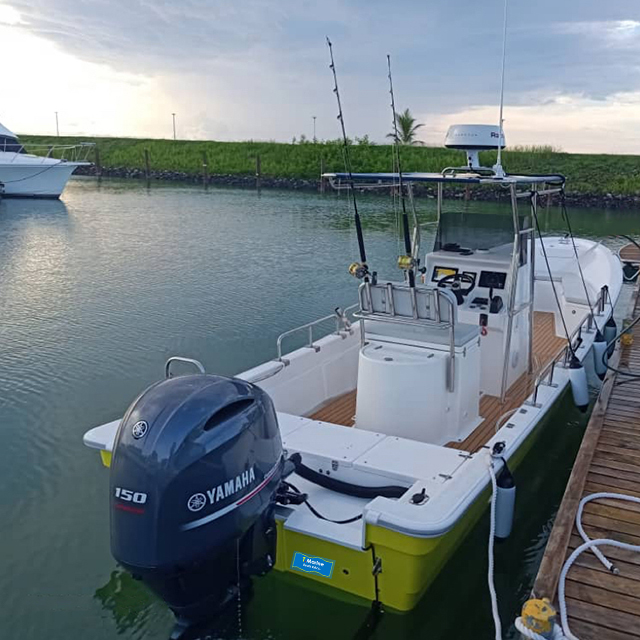
The main fishing area should remain clear enough for the expected fishing method. Rods, bait containers, coolers, and loose bags need defined storage positions so they do not occupy the walkway. The 26.5 ft 10-person open fisherman boat has an 8 m by 2.28 m layout with a large front deck. Times Marine specifies that up to four people can work on this deck at the same time. That gives buyers a much clearer idea of its fishing space than the total passenger number does.
Provide seating, shelter, and dry storage for family use
Family members who are not fishing need secure seating and somewhere to keep personal items dry and out of the walkway. Shade or a sheltered area is also useful during strong sun, light rain, or a longer day on the water. The 8 m open fisherman includes a semi-enclosed cabin for shelter, storage, and rest, while the front deck remains available for fishing or other group activities.
Not every family trip requires a fully enclosed cabin, entertainment system, or overnight accommodation. Buyers should specify what the group actually needs: day-use shelter, removable cushions, storage for bags, easy boarding, or more open deck space. Adding unnecessary fixtures can reduce movement space and make cleaning more difficult.
Make it easy to switch between fishing and cruising
A dual-purpose boat is easier to use when the crew can switch activities without rearranging the entire deck. Fishing gear should have a secure place during cruising, and removable seating should not block access when it is folded or moved. On mixed trips, one area can remain open for fishing while the rest of the group uses the seating and shelter. This separation also makes it easier to manage movement when hooks and lines are in use.
Which 10-Person Boat Layout Fits the Intended Use?
Times Marine offers two relevant layouts for groups of about ten people. The better choice depends on whether the buyer needs more working space and shelter or prefers a simpler open panga layout.
Comparison Point
8 m Open Fisherman
7.6 m Panga Fishing Boat
Specified capacity
9+1 persons
10 persons
Full dimensions
8 m × 2.28 m
7.6 m × 2.3 m
Maximum loading
2,760 kg
1,240 kg
Layout emphasis
Large front deck plus semi-enclosed shelter
Open panga layout for fishing and day use
Engine options
Single or twin; maximum recommended 2 × 115 HP
Single or twin; recommended 70–90 HP, maximum recommended 115 HP
Useful buyer profile
Group fishing, family day trips, sightseeing, or mixed leisure use requiring shelter
Buyers prioritizing an open, straightforward fishing and passenger platform
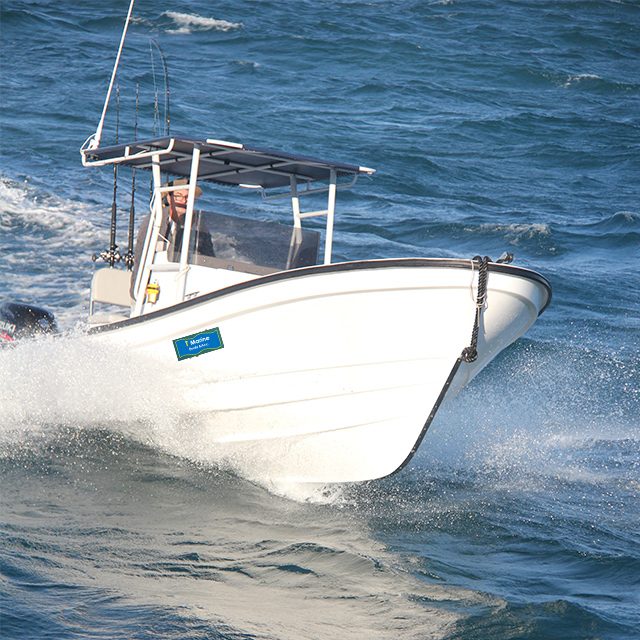
The 25 ft 10-person panga fishing boat is 7.6 m long and 2.3 m wide. It includes a 150 L fuel tank, an 80 L water tank, and an 80 L fish box. Its open arrangement suits buyers who want a straightforward platform for fishing and day trips without giving much of the deck to an enclosed structure.
The 8 m open fisherman takes a different approach. Its front working deck serves the anglers, while the semi-enclosed cabin gives other passengers a sheltered place to sit or rest. It also has a higher stated maximum load. Before ordering either model, buyers should confirm the final deck plan, installed equipment, engine arrangement, and permitted operating conditions.
When Is a 10-Person Fishing Boat a Good Fit?
A 10-person fishing boat works well when the group wants to combine day fishing with coastal cruising, sightseeing, transport, or relaxed time with family and friends. It is most comfortable when only part of the group fishes at one time and the remaining passengers have their own seating or shelter.
The same flexibility can be useful to charter operators, resorts, fishing clubs, rental businesses, distributors, and project buyers. Commercial buyers should first identify the activity that will take place most often or generate the most revenue. That activity should receive the most deck space instead of forcing fishing, transport, and leisure into an equal share of the layout.
A 10-person boat is less suitable when the buyer expects all ten passengers to cast simultaneously, needs overnight accommodation, intends to carry unusually heavy equipment, or requires operation beyond the stated navigation area. The 8 m open fisherman, for example, lists a navigation area of no more than 10 nautical miles from shore. A different vessel category may be necessary for routes outside the selected model's documented operating limits.
It is also the wrong choice if the final passenger-and-equipment load exceeds the specified maximum loading. Reducing gear storage or changing seats cannot compensate for an unsuitable capacity or route. The final configuration must comply with the applicable rules and approval requirements in the destination market.
What Should Buyers Confirm Before Ordering?
Importers, dealers, charter operators, project contractors, and fleet buyers need more than a product photo and passenger number. A clear purchase specification should include the following points:
Define whether the boat will mainly be used for fishing, family leisure, passenger transport, sightseeing, or a planned mix of these activities.
Estimate the usual number of adults, children, crew members, and people who will actively fish.
Calculate the expected load with passengers, fuel, water, engines, batteries, fishing equipment, safety gear, and luggage included.
Describe the intended route, distance from shore, seasonal conditions, launch site, and any local operating limits.
Confirm the position of fixed and removable seats, clear fishing areas, console, storage, shelter, and boarding access on the deck plan.
Agree on the engine brand, single or twin configuration, shaft requirements, controls, and availability of local service parts.
List the rod storage, fish box, water supply, drainage, and working surfaces needed for the planned fishing method.
Confirm the drawings, technical specifications, packing method, included equipment, warranty scope, and documents needed for local registration or approval.
Seat positions, hull and cushion colors, consoles, branding, and deck details may need to change for a distributor, resort, charter company, or institutional project. Times Marine provides custom boat configuration options based on dimensions, capacity, horsepower needs, layout, colors, logos, and buyer-supplied requirements. Any requested change should be checked against weight distribution, usable deck area, and the final capacity specification before production.
Buyers comparing a fiberglass boat manufacturer should also ask how the hull is produced, how quality checks are recorded, which components are included, and how technical support will be handled after delivery. Once the operating profile and configuration are clear, procurement teams can request a boat quotation using the same specification so competing options are evaluated on an equal basis.
Conclusion
Yes, a 10-person fishing boat can serve both anglers and families, as long as the deck is planned for the way the group will actually spend the day. Buyers should look beyond the number of seats and compare fishing space, shelter, payload, storage, engine options, and operating limits. Times Marine's 9+1 open fisherman places more emphasis on a working deck and shelter, while its 10-person panga provides a simpler open layout. The right choice is the one that fits the usual passenger mix, fishing method, and route.
FAQ
Can ten people fish at the same time on a 10-person fishing boat?
Not necessarily. The person rating is not a guarantee of ten unobstructed casting positions. The practical number of active anglers depends on the deck plan, fishing method, rod movement, installed seating, and the amount of gear carried.
What is the difference between a 10-person open fisherman boat and a panga boat?
An open fisherman layout can combine a large working deck with a console or sheltered area, while a panga design generally emphasizes a straightforward open platform. The exact choice should be based on payload, route, fishing style, passenger comfort, and required equipment.
Is a 10-passenger fiberglass fishing boat suitable for children?
It may be suitable for family use when the selected configuration provides secure seating, shelter, clear walkways, appropriate safety equipment, and responsible supervision. Buyers must also follow the boat's operating limits and the rules applicable in their market.
Should a 10-person fishing boat use one engine or two?
That decision depends on the boat model, total operating load, route, required performance, service availability, and local requirements. Both Times Marine products discussed here list single or twin-engine configurations, but the permitted horsepower differs by model.
Can the seating and deck layout be customized for a business project?
Times Marine lists customization options for seating, deck layout, consoles, colors, logos, and other requirements. The manufacturer should review any change together with capacity, load distribution, access, and the final technical specification.