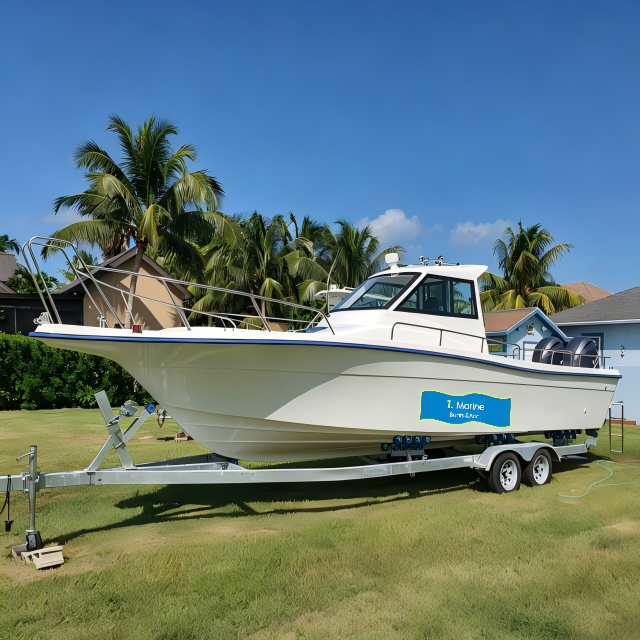
The historical divide between hardcore offshore fishing vessels and recreational family cruisers is closing. Buyers previously faced a strict compromise. You either selected a vessel capable of handling unpredictable offshore conditions, or you prioritized the safety, comfort, and amenities required for multi-generational family entertainment. Modern marine design solves this through hybrid layouts, advanced hull materials, and modular seating. Today, fishing boats for ocean serve as dual-purpose platforms. This guide establishes the technical criteria for evaluating how well a vessel balances deep-sea fishability with family-friendly utility. We will examine hull dynamics, construction materials, and deck layouts to help you identify a platform that performs in heavy swells while keeping passengers secure and comfortable.
Key Takeaways
Dual-Purpose Engineering: The most effective vessels utilize variable deadrise hulls to ensure offshore stability while maximizing deck space for family activities.
Material Superiority: A well-constructed fiberglass fishing boat offers the optimal strength-to-weight ratio for ocean swells, significantly reducing structural fatigue and passenger discomfort.
Layout Dictates Utility: Choosing between an open center console and a cabin fishing boat fundamentally alters the vessel's weather protection, overnight capabilities, and usable fishing footprint.
The Size vs. Manageability Balance: Buyers must weigh the extended range and rough-water handling of larger vessels against the road trailerability and storage convenience of smaller footprints.
Manufacturer Accountability: Long-term satisfaction relies heavily on selecting a fishing boat manufacturer with transparent warranty structures, NMMA certification, and a proven track record in offshore hull design.
The Shift Toward the Hybrid Ocean Fishing Boat
Defining the Modern Family Fishing Boat
Traditional offshore rigs were built with a singular focus on catching fish. They featured sparse decks, minimal seating, and aggressive hull designs that prioritized speed and wave-crushing ability over passenger comfort. Contemporary hybrid designs flip this approach. A modern family fishing boat integrates modular components that convert a rugged fishing platform into a premium entertainment space. Builders achieve this using heavy-duty stainless steel gas struts and friction hinges. Fold-away transom seating disappears flush into the aft bulkhead when lines are in the water. It instantly folds back out to accommodate passengers during a sunset cruise. Removable bow cushions transform a forward casting platform into a comfortable lounging area.
This dual-purpose engineering delivers a distinct operational advantage. Operators can safely navigate deep offshore waters for big game catch-for-dinner experiences while providing luxury leisure spaces for non-anglers. The integration of closed-cell foam upholstery, marine-grade audio systems, and ergonomic seating does not detract from the vessel's primary function. It broadens the boat's usability. The platform remains active every weekend rather than sitting idle at the dock waiting for a dedicated fishing crew.
Success Criteria for Dual-Purpose Vessels
Evaluating these hybrid platforms requires strict adherence to offshore safety baselines. A true ocean-capable vessel must feature a self-bailing cockpit. This gravity-fed drainage system ensures that any water taken over the bow or gunwales immediately exits the deck through oversized scuppers. The deck floor must sit significantly above the waterline for this to work effectively. High freeboard—the distance from the waterline to the top of the gunwale—keeps passengers secure within the boat during heavy swells. It provides a physical barrier against rogue waves. Redundant bilge systems offer a necessary fail-safe. You want at least two high-capacity bilge pumps, typically 1500 GPH or larger, wired to independent float switches and separate battery banks.
Family entertainment requires specific utility features beyond basic survival metrics. Adequate shade is mandatory. Extended hard-tops with powder-coated aluminum frames protect passengers from severe UV exposure during prolonged trips. Access to a marine head extends the duration families can comfortably remain on the water. These are typically concealed within the center console or forward cabin and should feature a holding tank with both a macerator for offshore discharge and a deck fitting for marina pump-outs. Safe boarding mechanisms facilitate swimming and snorkeling. Look for heavy-duty telescoping dive ladders with at least three steps and transom walkthrough doors that prevent passengers from climbing awkwardly over high gunwales.
Multi-generational ergonomics dictate the layout's success. The deck must ensure comfort and safety for all ages. Deep-welled toddler zones in the bow keep young children contained and secure while underway. For older adults, accessible, shock-absorbing helm seating reduces the physical toll of navigating choppy waters. Suspension pedestals prevent spinal compression and joint fatigue during long transits through heavy head seas.
Core Evaluation Dimensions for Fishing Boats for Ocean
Hull Design, Size, and Hydrodynamic Stability
The foundation of any offshore vessel is its hull design. Buyers constantly navigate the trade-offs between Deep-V and Modified-V configurations. A Deep-V hull typically features a deadrise angle of 21 to 24 degrees at the transom. This sharp entry angle slices through heavy chop. It mitigates the violent pounding associated with offshore swells. However, this aggressive angle compromises lateral stability at rest. When anchored at a sandbar, a Deep-V hull rolls noticeably from side to side in a pendulum motion.
A Modified-V hull flattens out toward the stern, often settling around 17 to 19 degrees of deadrise. This design provides exceptional lateral stability. It makes the deck far more comfortable for families moving around while anchored. The trade-off is a harsher ride when pushing through offshore head seas. Advanced hull designs bridge this gap by incorporating prominent reverse chines and aggressive lifting strakes. These horizontal ridges run along the hull's bottom. They provide hydrodynamic lift to get the boat on plane faster while aggressively deflecting spray away from the cockpit.
Vessel size introduces the classic dilemma of range versus manageability. Larger boats inherently possess superior wave-crushing capabilities. Their extended waterline bridges the gap between wave crests, delivering a smoother ride and an extended offshore range. Smaller vessels offer unmatched agility and road manageability. A well-designed 23-foot boat with a high freeboard and a sharp entry can safely navigate nearshore ocean conditions while remaining easy to tow with a standard half-ton pickup truck.
Hull Configuration Performance Matrix
Hull Type
Transom Deadrise
Rough Water Ride
At-Rest Stability
Draft Requirement
Deep-V
21° - 24°
Excellent (Slices through heavy chop)
Poor (Prone to rolling at anchor)
Deep (Requires more water to float)
Modified-V
17° - 19°
Moderate (Can pound in heavy seas)
Excellent (Very stable for walking)
Shallow (Better for sandbars)
Catamaran
Variable (Twin Sponsons)
Superior (Traps air to cushion ride)
Superior (Wide stance prevents roll)
Moderate (Depends on sponson depth)
The Fiberglass Fishing Boat Advantage
Construction material dictates a vessel's behavior in open water. Aluminum dominates freshwater and shallow coastal applications due to its lightweight nature. However, fiberglass remains the undisputed standard for offshore environments. A well-laid fiberglass fishing boat provides the mass necessary to push through heavy ocean chop rather than bouncing over it. This weight translates directly to a smoother, more predictable ride.
Fiberglass offers superior structural integrity when subjected to the torsional twisting forces of ocean swells. Builders utilize a grid of fiberglass stringers injected with high-density polyurethane foam. This creates a rigid, unsinkable backbone. The material also provides exceptional acoustic dampening. Hull slap—the loud, repetitive sound of waves striking the boat—is significantly muted in a fiberglass hull compared to an aluminum one. This quieter ride reduces sensory fatigue for families during long days on the water. The molding process allows builders to create complex deck layouts. They integrate sweeping curves, molded-in seating, and seamless storage compartments that are impossible to replicate with welded metal.
Layout Selection: Center Console vs. Cabin Fishing Boat
The deck layout dictates how a family interacts with the vessel. The center console remains the most popular configuration for day-trip entertainment. By placing the helm in the middle of the deck, operators gain 360-degree fishability. Anglers can follow a hooked fish entirely around the boat without obstruction. This layout maximizes open deck space, allowing multiple people to move freely. Weather protection relies entirely on T-tops and optional canvas enclosures. This makes the center console ideal for fair-weather day trips.
A cabin fishing boat serves a different operational profile. These vessels sacrifice forward deck space to provide a dedicated, enclosed shelter. This climate-controlled resting area is invaluable for families with young children. It offers a secure place to nap, escape sudden rain squalls, or get out of the wind. The inclusion of V-berths allows for overnight capabilities, transforming the boat from a day cruiser into a weekend expedition platform. The primary trade-off is reduced bow access. Anglers must fight fish primarily from the aft cockpit.
Balancing Amenities with Offshore Capability
Features-to-Outcomes Mapping
The brilliance of a modern ocean fishing boat lies in its component versatility. Features originally designed strictly for angling now serve dual purposes. They enhance the family experience without compromising utility.
Insulated fish boxes are a prime example. Engineered to hold hundreds of pounds of ice and offshore catch, these massive in-deck compartments double as high-capacity coolers. They feature thick polyurethane foam insulation and macerator pumps for easy draining. Families can store enough food, beverages, and ice for a massive sandbar gathering. This eliminates the need to clutter the deck with portable hard coolers.
Livewells offer unexpected utility. Designed to keep baitfish alive through continuous seawater circulation, they feature baffled interiors and clear acrylic lids. When thoroughly cleaned and filled with fresh seawater, a 30-gallon livewell functions as a safe, contained splash pool for toddlers. It keeps them cool and entertained under the hardtop while the adults fish or relax.
Forward lounge seating with removable backrests represents the pinnacle of hybrid design. During the transit to the fishing grounds, these plush, contoured seats provide luxury comfort. Once the anchor drops and fishing begins, the backrests detach and stow away in dedicated console slots. This leaves a wide, flat, unobstructed casting platform covered in aggressive non-skid material.
Extended T-tops and retractable Biminis address the most critical environmental factor: sun exposure. Maximizing shade allows for longer, safer days on the water. It prevents sun fatigue and heat exhaustion, particularly for sensitive family members. Many modern tops include integrated misting systems and drop-down canvas wings to block wind spray.
Safety and Compliance in Ocean Environments
Taking a family miles offshore requires strict adherence to safety and compliance standards. Operators must intimately understand their vessel's United States Coast Guard (USCG) capacity plates. These plates dictate the maximum weight and passenger limits. Exceeding these limits in ocean swells drastically alters the boat's center of gravity. It increases the risk of capsizing when navigating following seas.
Flotation standards are equally critical. Vessels under 20 feet must meet strict level flotation requirements. This ensures the boat remains upright and level even if completely swamped. Larger vessels rely on sealed bulkheads and high-capacity bilge systems. High gunwales provide a deep, secure cockpit. You want a minimum interior depth of 24 inches to keep children safely contained when the boat rolls in a trough. Strategically placed grab rails must be accessible from every seating position. These should be through-bolted with backing plates, not just screwed into the fiberglass. Non-skid decking, whether molded diamond-pattern fiberglass or aftermarket EVA foam, prevents slips and falls when the deck gets wet from spray or swimming activities.
Operational Realities and Implementation Risks
Logistical Realities of Vessel Size and Towing
Selecting the right vessel requires a hard look at operational logistics. A 30-foot twin-engine boat provides massive range. It allows families to access remote offshore fishing grounds or distant islands in total comfort. It handles rough seas with ease, providing a sense of absolute security. However, this size introduces complex towing realities.
Towing a large offshore vessel requires a heavy-duty payload vehicle. You will need a three-quarter-ton or one-ton truck. The trailer must be equipped with robust braking systems, typically electric-over-hydraulic disc brakes on multiple axles, to handle the immense weight. Launching and retrieving a boat of this size requires deep-water ramps and high-tide timing. Saltwater trailer maintenance becomes a rigorous requirement. You must flush the brakes and inspect the hubs after every single use to prevent catastrophic failure on the highway.
A vessel in the 21-to-24-foot range is small enough to be manageable on the road with standard half-ton tow vehicles. It can be stored in a residential driveway on a standard tandem-axle aluminum trailer. While the offshore range is shorter and the operator must be far more selective regarding weather windows, the ease of use often results in the family taking the boat out more frequently.
Vetting a Fishing Boat Manufacturer
The structural integrity of an offshore vessel is entirely dependent on the builder's processes. Vetting a fishing boat manufacturer requires looking past the upholstery and examining the engineering. Evaluate the hull blister warranties. Top-tier builders use vinylester resins in the skin coat to prevent water intrusion and osmotic blistering over time.
Hardware quality separates premium builders from budget brands. True offshore boats utilize 316L stainless steel for all cleats, rod holders, and hinges. This offers superior corrosion resistance compared to standard 304 stainless. Through-hull fittings below the waterline must be cast bronze or high-grade Marelon, never plastic. Examine the wiring behind the helm. It should comply with ABYC standards, utilizing tinned copper wire, heat-shrink connectors, and properly labeled breaker panels. A manufacturer with a robust, factory-direct support system or a highly trained local dealer network ensures that structural repairs are handled swiftly.
Conclusion
Schedule a rough-water sea trial in 2-to-3-foot chop to evaluate hull performance, lateral stability, and spray deflection.
Calculate your vehicle's exact towing capacity against the vessel's fully loaded wet weight, including fuel, water, gear, and the trailer.
Inspect the wiring behind the helm for ABYC compliance, ensuring all connections use tinned copper and heat-shrink tubing.
Measure the interior gunwale height in the aft cockpit to confirm it meets your personal safety standards for young passengers.
FAQ
Q: What size fishing boat is safe for the ocean?
A: Vessels 21 feet and above are generally suitable for nearshore ocean use, while 26 feet and larger are recommended for true offshore excursions. Hull design, high freeboard, self-bailing cockpits, and the operator's weather awareness are just as critical as overall length for ensuring passenger safety.
Q: Can a smaller ocean fishing boat handle rough seas?
A: Yes. While larger boats offer greater range, well-designed smaller vessels with deep-V hulls, aggressive chines, and high freeboards can safely navigate nearshore conditions. Success relies on the operator pairing the vessel's physical capabilities with careful, continuous weather monitoring and proper trim tab usage.
Q: Is a fiberglass or aluminum boat better for ocean use?
A: Fiberglass is the industry standard for ocean environments. Its heavier weight allows it to cut through waves rather than bouncing over them, providing a smoother ride. Fiberglass also allows for complex, molded hull shapes that deflect spray and offers complete resistance to saltwater corrosion.
Q: What are the benefits of taking a family fishing boat into deeper waters?
A: Accessing offshore environments increases the chances of catching larger pelagic species. This transforms a standard recreational boat ride into an engaging family bonding experience. It teaches children about marine ecosystems and the mechanics of deep-sea angling while providing fresh catch for dinner.
Q: Can a family fishing boat be used for water sports?
A: Yes. Modern offshore boats are frequently equipped with heavy-duty tow eyes, ski pylons, and powerful outboard engines capable of pulling wakeboarders and tubers. While their hull designs create different wake shapes than dedicated towboats, they offer excellent performance for recreational family water sports.
Q: What is the advantage of a cabin fishing boat for families?
A: It provides a dedicated, lockable marine head, dry storage for gear, and a secure, climate-controlled area. This shaded space allows children to rest, nap, or escape harsh wind and sun during long offshore trips, drastically extending the family's endurance and comfort on the water.