Tightening margins across the maritime industry force operators to rethink fleet strategies. Rising fuel consumption, stringent compliance standards, and escalating maintenance overhead actively squeeze offshore anglers and fleet managers. You can no longer rely on guesswork when selecting a vessel. Every operational hour must generate revenue. Mechanical failures directly threaten seasonal profitability. The core business problem lies in a constant tension. Operators must acquire a vessel capable of handling harsh, unpredictable offshore conditions while maintaining a strictly sustainable operational budget. You have to balance payload capacity, navigational range, and crew safety against crippling capital expenditures and ongoing operational overhead. Many operators fall into the trap of over-equipping. They assume commercial success requires a luxury-finished, high-end vessel. We need to debunk the expensive boat myth right now. Profitability stems from utilitarian, structurally sound platforms rather than premium sportfishing aesthetics. A bare-bones hull with reliable propulsion out-earns a highly polished luxury vessel sitting at the dock awaiting proprietary parts.
Overall operational expense dictates viability: A cost effective fishing boat is defined not by its purchase price, but by its fuel burn rate, maintenance downtime, and payload-to-weight ratio.
The 25-30' size class is the critical battleground: This specific length range represents the tipping point where operators must carefully weigh the economics of inboard versus outboard propulsion.
Propulsion shifts impact margins: The industry is seeing a calculated shift toward the outboard motor fishing boat for commercial use due to modular maintenance and maximized deck space, though inboards remain standard for heavy-displacement offshore work.
Hull design drives efficiency: Alternatives like the panga fishing boat offer extreme cost-effectiveness for specific coastal and near-offshore commercial applications compared to traditional deep-V hulls.
Downtime is the ultimate cost: Commercial viability relies on minimizing days lost to mechanical failure; engine reliability, structural durability, and parts availability often outweigh initial fuel efficiency metrics.
Defining Commercial Viability: What Makes a Cost Effective Fishing Boat?
Understanding the balance between initial capital expenditure and ongoing operational expenditure forms the foundation of marine profitability. Entry-level utilitarian hulls require a lower upfront investment. Heavy-duty offshore platforms scale significantly higher in initial purchase requirements. However, a lower initial purchase quickly becomes a massive liability if operational expenses scale disproportionately. If a budget-friendly hull requires maximum horsepower just to stay on plane, the resulting fuel burn obliterates daily profit margins. You must evaluate the vessel as a complete working system. Factor in the replacement parts, routine servicing, and the structural integrity of the fiberglass layup.
A commercial fishing boat must safely transport sufficient ice, heavy gear, and maximum catch limits to turn a profit on every single trip. The days-at-sea metric is critical. Weather capability directly impacts annual revenue. If your hull design forces you to stay in port during moderate chop while larger vessels fish comfortably, you lose vital earning days. The deck must feature proper scupper placement for rapid drainage under heavy loads. Insulated holds must maintain ice integrity during extended trips in high summer temperatures.
Let's look at the structural components that dictate this viability. The stringer grid acts as the spine of the vessel. A poorly designed grid flexes under heavy loads, leading to gelcoat stress cracks and eventual delamination. Commercial operators need solid fiberglass bottoms, often reinforced with Kevlar or carbon fiber in high-stress areas like the keel and chines. Coring materials above the waterline save weight, but they must be properly sealed to prevent water intrusion. A waterlogged core adds hundreds of pounds of dead weight, destroying fuel efficiency and altering the vessel's center of gravity.
A proper commercial livewell system requires high-capacity raw water pumps, often running in parallel for redundancy. If a single pump fails, you lose your entire bait supply, effectively ending the fishing day. Scupper sizes must be large enough to evacuate green water from the deck in seconds, not minutes. Small recreational scuppers clog with scales and debris, creating a dangerous free-surface effect that compromises vessel stability.
True profitability varies heavily by region. Survey data consistently shows that a vessel optimized for Northeast offshore swells may be entirely financially inefficient for Gulf Coast nearshore operations. Northern operators often require heavy-displacement hulls with enclosed pilot houses to combat freezing spray and steep wave periods. Southern operators prioritize open deck space, shallow drafts, and high-speed transit to reach distant oil rigs or reef systems. You must match the hull's operational characteristics directly to local sea conditions and target fisheries to achieve maximum efficiency.
Evaluating Motor Fishing Boat Classes for Offshore Operations
Heavy-displacement hulls, including deep-V monohulls and offshore catamarans, represent the traditional standard for deep-sea work. These vessels are engineered specifically to handle severe weather and massive structural stresses. When operating in heavy seas, commercial hulls often push near their maximum permissible stress limits. A true ocean fishing boat features thick fiberglass layups, robust stringer grids, and a steep transom deadrise to slice through oncoming waves. The trade-offs are clear. You gain exceptional stability, massive payload capacity, and a safer ride in rough conditions. However, you sacrifice fuel efficiency. Pushing a heavy deep-V hull through the water requires tremendous horsepower, leading to significant fuel consumption and high initial rigging requirements.
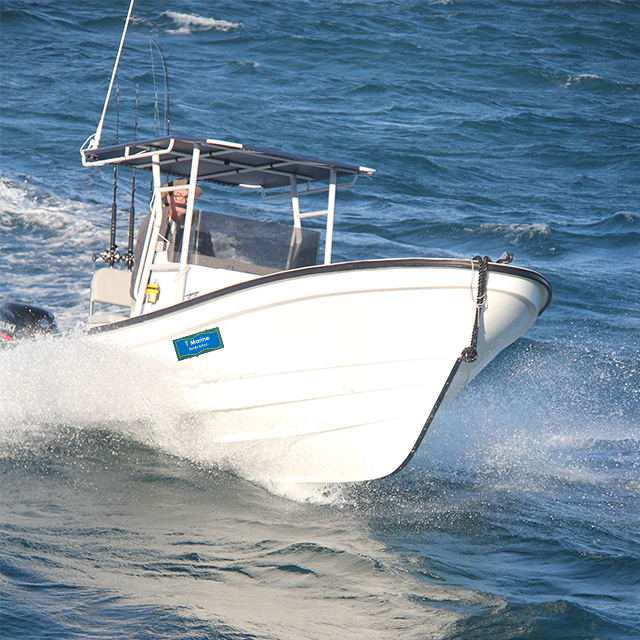
For operators seeking high-efficiency alternatives, the panga design offers a globally recognized commercial platform. Characterized by a narrow beam, a high sweeping bow, and a shallow draft, this hull type requires minimal horsepower to achieve planing speeds. A prominent delta pad at the stern provides lift, allowing these vessels to run efficiently on a single mid-range engine. The trade-offs involve payload and comfort. The narrow beam restricts total deck space and limits the volume of ice and catch you can carry. The lighter weight and flatter aft section can result in a punishing ride during extreme offshore chop, reducing crew comfort and increasing fatigue over long transit times.
The 25 to 30-foot size bracket serves as the most common entry point for independent commercial operators. This specific class hits the sweet spot for operational economics. It provides the minimum required deck space and freeboard for offshore safety while keeping initial capital investments manageable. Vessels in this range can typically be trailered, eliminating expensive commercial slip fees and allowing operators to launch closer to active fishing grounds. This size class also allows for flexible propulsion choices, sitting right on the dividing line where operators must choose between twin outboards or a single inboard diesel.
Let's break down the specific hull dynamics. A deep-V hull typically features a deadrise angle between 21 and 24 degrees at the transom. This sharp angle cuts through waves, providing a soft ride. But it also makes the boat tender at rest, meaning it rolls significantly in a beam sea. Commercial fishermen pulling pots or handlining need stability. A modified-V hull, with a deadrise of 17 to 19 degrees, offers a compromise. It provides better stability at rest and requires less horsepower to plane, though it pounds more in heavy head seas. Catamarans trap air between the sponsons, creating lift and a remarkably soft ride. They offer massive deck space due to their wide beam carried all the way forward. However, catamarans are highly sensitive to weight distribution. Overloading one side with heavy gear drastically alters the handling characteristics.
Modern commercial builders utilize vacuum infusion processes to achieve the perfect resin-to-glass ratio. This eliminates air voids and creates a lighter, stronger hull compared to traditional hand-laid methods. The gelcoat must be formulated to resist heavy impacts from lead weights, traps, and gaffs. A thin, recreational-grade gelcoat quickly chips and exposes the underlying fiberglass to water intrusion.
Commercial Vessel Hull and Propulsion Comparison
Vessel Type
Ideal Application
Primary Advantage
Main Limitation
Deep-V Center Console
Offshore pelagic species, rough water
Superior ride quality in heavy chop
High fuel consumption, requires maximum horsepower
Panga Style Hull
Near-shore, coastal day-boat operations
Exceptional fuel economy, low draft
Limited payload capacity, harsh ride in steep waves
Sensitive to weight distribution, high initial purchase
Propulsion Economics: Outboard Motor Fishing Boat vs. Inboard Systems
The debate between outboards and inboards dominates commercial fleet planning. Comparing the upfront costs reveals stark differences. Rigging a 28-foot hull with twin high-horsepower outboards requires a substantial initial investment in the motors, digital rigging, and steering cylinders. Installing a single commercial marine diesel inboard involves different financial hurdles, including heavy transmission gear, complex shaft alignments, and specialized exhaust routing. In the 25-30 foot class, outboards generally offer a more streamlined and predictable installation process, whereas inboards require a hull specifically molded to accommodate the engine box and running gear.
Fuel efficiency and lifecycle maintenance dictate long-term survival. Modern four-stroke outboards boast impressive fuel burn curves, utilizing lean-burn technology to optimize consumption at cruising RPMs. However, inboard diesels remain the undisputed champions of low-end torque and heavy-load fuel efficiency. The maintenance reality often drives the final decision. Outboards allow for rapid repowering. If a powerhead fails mid-season, you can unbolt the motor and hang a new one in an afternoon, virtually eliminating commercial downtime. Inboards require specialized diesel mechanics. Major repairs often necessitate dry-docking the vessel and pulling the engine through the deck. Despite this, a well-maintained commercial diesel can easily exceed ten thousand hours of service, far outlasting the typical lifespan of a heavily used outboard.
Engine placement directly affects usable deck space and commercial payload trade-offs. Outboards are mounted on the transom or an external bracket. This configuration frees up the entire aft bilge area, allowing builders to install massive, insulated fish boxes and high-capacity live wells below deck. Conversely, inboards consume prime central hull space. The engine box often sits right in the middle of the cockpit. However, inboards provide a completely clean transom. For operators hauling nets, setting longlines, or pulling heavy traps, a clear stern without outboard cowlings obstructing the workspace is an absolute operational necessity.
Let's look at the daily maintenance routines. Outboard operators must flush their engines with fresh water after every trip to prevent salt crystal buildup in the cooling passages. They must check the oil levels, inspect the lower unit for fishing line wrapped around the prop shaft, and grease the steering rams. Inboard operators face a different set of daily checks. They must inspect the raw water strainers for debris, check the transmission fluid, monitor the stuffing box for excessive dripping, and ensure the bilge blowers are functioning correctly. Both systems require rigorous adherence to maintenance schedules, but the physical accessibility of the components differs wildly. Outboards are fully exposed and easy to reach. Inboards often require crawling into cramped, hot engine compartments.
Propeller selection drastically alters vessel performance. Commercial operators often switch from three-blade to four-blade stainless steel propellers. A four-blade prop provides more stern lift, allowing a heavy boat to stay on plane at lower RPMs. This reduces fuel consumption in rough seas where high-speed transit is impossible. You must also monitor for cavitation and ventilation. Incorrect engine mounting height leads to aerated water flowing over the prop blades, causing slippage and severe damage to the lower unit gears.
Hidden Costs in Ocean Fishing Boat Operations
Beyond fuel and maintenance, hidden operational costs quickly erode profit margins. Commercial marine insurance is a mandatory and significant expense. Premiums scale based on vessel size, engine type, hull material, and your operational distance from shore. Running twin outboards fifty miles offshore carries a different risk profile than operating a single inboard diesel within sight of land. You must also account for the costs of compliance. Meeting Coast Guard or local maritime authority standards requires continuous investment in commercial-grade safety gear, including automatically deploying life rafts, EPIRBs, survival suits, and high-capacity fire suppression systems. Commercial slip fees, transient dockage, and regular bottom cleaning also add to the monthly overhead.
Depreciation and resale value require an evidence-based financial approach. Commercial vessels depreciate differently than recreational boats. You must separate the hull's lifespan from the propulsion system. A well-built solid fiberglass hull can remain commercially viable for decades if structurally maintained. Propulsion systems, however, depreciate rapidly based on hour meters. Outboard motors depreciate much faster than diesel inboards due to their higher RPM operating ranges and exposure to saltwater intrusion. Operators must factor strict repowering schedules into their five-to-ten-year financial models. Failing to budget for a mandatory repower leaves you stranded with a functionally obsolete vessel.
Consider the impact of marine growth on your hull. A dirty bottom drastically reduces fuel efficiency and top-end speed. Commercial operators keeping their boats in the water must schedule regular diver cleanings or haul-outs for fresh bottom paint. Ablative paints wear away over time, exposing fresh biocide, but they require annual reapplication. Hard paints last longer but build up layers that eventually need to be sandblasted off. The choice of bottom paint directly impacts your annual maintenance budget and your vessel's performance through the water.
Marine electrical systems demand constant vigilance. Saltwater environments rapidly degrade standard wiring. Commercial boats require tinned copper wire, heat-shrink connectors, and waterproof breaker panels. A single corroded ground wire can shut down your navigation electronics, livewell pumps, or even your engines. Upgrading a recreational electrical system to commercial standards requires significant labor and high-quality materials. Battery banks must be isolated, with dedicated starting batteries and separate deep-cycle house batteries to run electronics and pumps without draining the starting power.
Implementation Risks and Mitigation Strategies
Fuel price volatility remains a constant threat to maritime operations. Sudden spikes in marine diesel or gasoline prices destroy trip profitability overnight. To mitigate this risk, operators should utilize advanced route-planning software to minimize unnecessary transit miles. Optimizing cruising RPMs based on real-time fuel flow data ensures you run at peak efficiency. Selecting hull designs that require less horsepower to stay on plane provides a permanent buffer against rising fuel costs.
Structural fatigue and overloading pose severe safety and financial risks. Pushing entry-level or lightweight boats past their permissible structural stress limits to maximize catch payloads leads directly to stringer delamination, transom cracking, and catastrophic hull failure. Mitigation requires strict adherence to manufacturer payload capacities. Investing in commercial-grade fiberglass layups, reinforced bulkheads, and through-bolted hardware ensures the vessel withstands the brutal realities of daily offshore pounding.
Supply chain delays for proprietary motor parts paralyze a commercial operation. Extended downtime waiting for a simple sensor or lower unit gear costs thousands of dollars in lost revenue. Smart operators mitigate this by standardizing their fleet engines. Choose engine brands that maintain robust, local commercial dealer networks with fully stocked parts departments. Maintaining a cache of critical spare parts on hand ensures minor mechanical issues do not result in missed fishing days.
Standardize your fleet's propulsion systems to streamline parts inventory and mechanic training.
Implement a digital maintenance log to track engine hours, fuel burn trends, and component lifespans.
Conduct weekly structural inspections of the transom, stringers, and deck joints to catch fatigue early.
Stock a comprehensive onboard spares kit, including water pump impellers, fuel filters, thermostats, and a spare propeller.
Train all crew members on emergency troubleshooting procedures for electrical and fuel delivery systems.
Weather routing represents another critical mitigation strategy. Commercial operators cannot afford to get caught in unforecasted gales. Utilizing satellite weather overlays on your multifunction displays allows you to track storm cells and wave heights in real-time. Understanding how your specific hull reacts to different wave periods and directions allows you to adjust your heading and speed to minimize structural slamming and crew fatigue.
Conclusion
A motor fishing boat proves highly viable for ocean and commercial applications only when the vessel's overall operational expense aligns perfectly with the specific fishery's revenue model and regional sea conditions. Success requires stripping away emotional preferences and evaluating hulls and engines purely as industrial tools. You must match the platform's capabilities directly to your daily payload requirements and weather constraints.
When shortlisting your options, follow a strict operational logic. Choose a multi-outboard setup for fisheries requiring high-speed transit, modular maintenance, and maximum below-deck hold space, particularly in the 25-30 foot range. Opt for a diesel inboard if your operation demands heavy hauling, long-range multi-day trips, and maximum engine longevity with a clear transom. Select a panga-style hull for near-shore, low-overhead day-boat operations where minimizing initial capital and daily fuel consumption is the absolute priority.
Hire a certified marine surveyor to inspect hull integrity, stringer grids, and transom moisture levels before finalizing any purchase.
Calculate your projected fuel burn per nautical mile based on historical route data and real-world engine performance bulletins.
Obtain commercial marine insurance quotes immediately to verify your exact monthly operational overhead.
Establish a standardized preventative maintenance schedule to eliminate unexpected mechanical downtime during peak fishing seasons.
FAQ
Q: How do you determine the right hull size for commercial fishing?
A: Hull size depends entirely on your target fishery, average sea conditions, and payload requirements. You must calculate the weight of your crew, full fuel tanks, ice, gear, and maximum catch. The vessel must safely support this total weight while maintaining enough freeboard to prevent swamping in rough seas. Smaller 25-foot boats work well for nearshore day trips, while multi-day offshore operations require 30-foot or larger platforms.
Q: Are outboard motors reliable enough for commercial ocean fishing?
A: Yes, modern four-stroke outboards are heavily utilized in commercial fleets due to their exceptional reliability. To maintain peak performance in harsh marine environments, operators must strictly adhere to manufacturer-recommended service intervals. This typically involves executing comprehensive maintenance every hundred and three hundred operational hours, including oil changes, lower unit service, and water pump replacements.
Q: Why is the panga-style hull considered highly efficient for coastal operations?
A: The design features a narrow beam, high sweeping bow, and shallow draft, allowing it to plane easily with minimal horsepower. This significantly reduces daily fuel consumption and initial engine rigging requirements. It serves as an ideal platform for near-shore, low-overhead day-boat operations where payload requirements remain moderate and fuel efficiency is the primary operational goal.
Q: What is the main advantage of an inboard diesel engine?
A: Inboard diesel engines offer superior longevity, low-end torque, and excellent fuel efficiency for heavy-displacement hauling. Crucially, they provide a completely clean transom. This unobstructed aft workspace is essential for safely hauling nets, setting traps, and managing longlines without outboard cowlings interfering with the gear or the crew's movement.
Q: How does payload capacity affect overall profitability?
A: A vessel must safely transport sufficient ice, gear, and catch to offset fixed trip expenses. If a boat lacks the structural payload capacity to maximize a strong bite, the operational overhead per trip remains high while revenue drops. This imbalance drastically reduces your net profit margins over the course of a fishing season.
Q: What role does deck space play in choosing a propulsion system?
A: Deck space directly dictates operational efficiency. Outboards free up the aft bilge for massive insulated fish boxes and live wells. Inboards consume central hull space with an engine box, but they keep the stern entirely clear. This prevents gear entanglement during complex commercial deployments and provides a safer working environment for the deck crew.